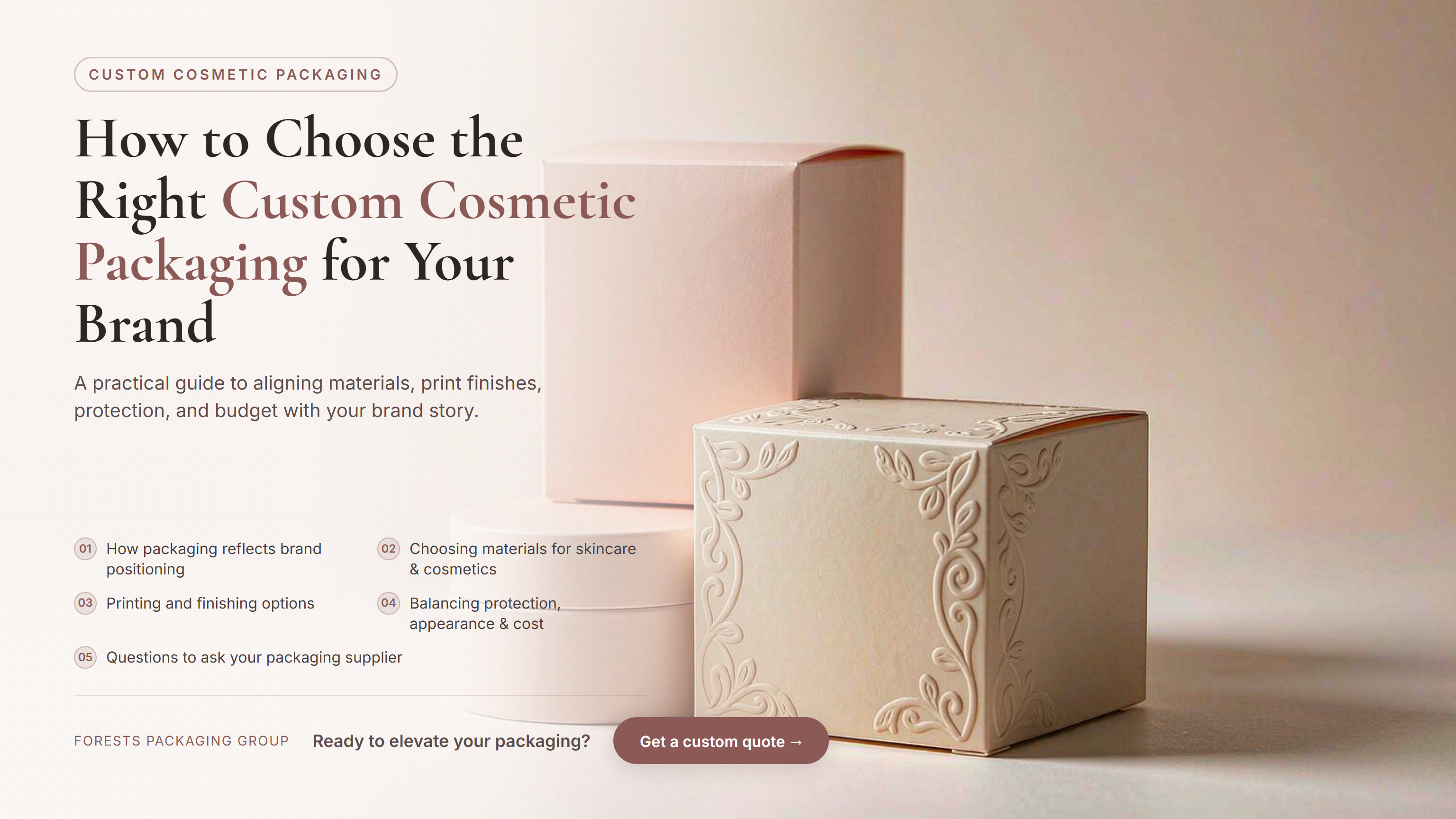
In the beauty industry, packaging is more than a container. It protects the product, communicates brand value, and shapes the customer's first impression. For skincare brands, cosmetics manufacturers, and beauty product distributors, choosing the right custom cosmetic packaging requires a balance between visual appeal, product protection, material selection, and production cost. So, what should you consider before developing your next cosmetic packaging project? 1. Start With Your Product Requirements Different cosmetic products require different packaging solutions. Skincare cartons, serum packaging, cosmetic gift sets, and beauty accessories may have different requirements for dimensions, product weight, protection, and presentation. Before selecting a packaging structure, consider: - Product dimensions and weight - Packaging and transportation requirements - Retail display or e-commerce use - Product positioning and target customers - Expected order quantity and budget A clear understanding of these requirements helps establish the right packaging specifications from the beginning. 2. Select the Right Packaging Material Material selection influences the appearance, structural performance, and overall cost of cosmetic packaging. Folding cartons are commonly used for skincare products, cosmetics, and retail packaging because they offer flexibility in printing and structural design. Rigid boxes are suitable for premium gift sets and luxury beauty products that require a more substantial presentation. Specialty papers and textured materials can create distinctive visual and tactile effects, helping brands communicate their identity through packaging. The best material is not necessarily the most expensive one. It is the material that meets the product's functional requirements and brand objectives. 3. Use Printing and Finishing to Strengthen Brand Identity Custom cosmetic packaging provides opportunities to create a consistent brand experience. Depending on the design and material, finishing options may include: - Foil stamping for metallic accents - Embossing and debossing for texture - Spot UV for selective highlights - Matte or gloss finishes for different visual effects - Custom printing for brand colors and graphics Effective packaging design does not require every available finishing technique. A well-planned combination of colors, materials, typography, and finishing can often create a stronger result. 4. Consider Sustainability From the Design Stage More brands are evaluating packaging materials, material usage, and end-of-life considerations as part of their product development process. Paper-based packaging can be an option for many cosmetic applications. However, recyclability depends on the complete packaging structure, including coatings, laminations, adhesives, and other components. Where certified materials are required, buyers should confirm the relevant certification scope and documentation with their supplier. 5. Work With a Packaging Manufacturer Early Involving a packaging manufacturer during the design stage can help identify opportunities to improve structural suitability, material efficiency, production feasibility, and cost control. At Forests Packaging Group, we provide customized paper packaging solutions for brands across different product categories, including folding cartons, rigid gift boxes, corrugated packaging, paper bags, and paper tubes. From packaging concept development and sampling to manufacturing and delivery, the objective is to turn packaging requirements into a practical, production-ready solution. Looking for custom cosmetic packaging for your next product launch? Share your product dimensions, packaging concept, estimated quantity, and target market with our team. We can help you explore suitable packaging structures and material options. #CustomCosmeticPackaging #CosmeticPackaging #CustomPackaging #PackagingDesign #PackagingManufacturer